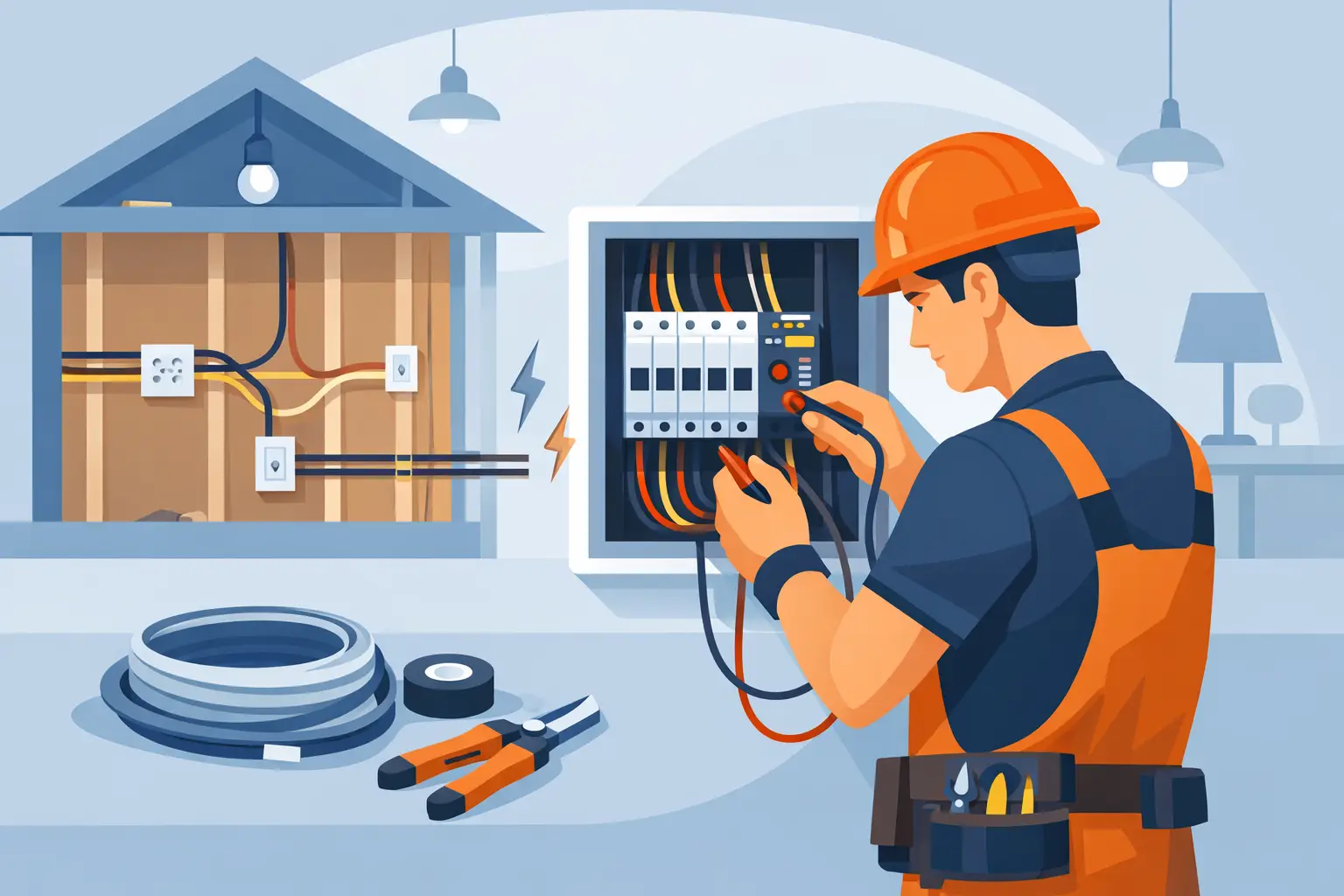
If your lights dim when the microwave starts, outlets feel warm, or you still have two-prong receptacles in parts of the home, you may be asking how to redo electrical in house without creating bigger safety issues. That is the right question to ask early. Whole-home electrical work affects fire risk, code compliance, insurance concerns, and how well your home handles modern demand.
For most homeowners, redoing electrical is not a single weekend project. It is a planned upgrade that usually includes evaluating the panel, replacing outdated wiring, adding grounded circuits, updating outlets and switches, and making sure kitchens, bathrooms, HVAC equipment, appliances, and newer loads like EV chargers have the right support. Some homes need partial rewiring. Others need a much broader reset.
When a house needs rewiring
A home does not have to be very old to have electrical problems, but age is often part of the story. Houses built decades ago were not designed for today’s number of devices, larger appliances, home offices, or backup power needs. In Western North Carolina, many homeowners are dealing with a mix of older wiring, later additions, and patchwork repairs from different eras.
Warning signs matter. Frequent breaker trips, flickering lights, buzzing outlets or switches, burning smells, ungrounded receptacles, and aluminum or knob-and-tube wiring can all point to a system that needs professional attention. So can a panel that is undersized or full, especially if you are planning renovations or adding major equipment.
That does not always mean the entire house must be stripped and rewired. Sometimes the issue is localized to a damaged circuit, an overloaded panel, or a room addition that was never properly updated. The only safe way to know is to start with a thorough inspection.
How to redo electrical in house: start with a full assessment
The first step is not opening walls. It is understanding what you have. A licensed electrician will usually assess the age and type of wiring, the condition and capacity of the main panel, grounding and bonding, outlet and switch condition, and whether the current system meets present-day residential code requirements.
This stage matters because rewiring is not just about replacing old wire with new wire. It is also about correcting layout problems. You may need more circuits in the kitchen, dedicated lines for laundry equipment, GFCI and AFCI protection in required areas, and better lighting distribution. If your home has had remodels over the years, hidden junctions or undocumented changes may also need to be corrected.
A good assessment should also look ahead. If you expect to add a hot tub, workshop equipment, a generator connection, or an EV charger later, it is usually more cost-effective to plan for that now than to redo finished work again in two years.
What rewiring usually includes
When homeowners think about rewiring, they often picture wire replacement only. In reality, the scope is broader. Most full or major electrical redo projects include new branch circuit wiring, outlet and switch replacement, service panel evaluation or replacement, breaker upgrades, grounding improvements, and code-required protection devices.
In many cases, fixtures are part of the discussion too. If your old wiring project is already opening ceilings and walls, it may be the best time to replace outdated lighting, add recessed lights, install ceiling fan boxes, or move switches to more practical locations.
This is also when electricians correct convenience issues that have become daily frustrations. Not enough outlets in bedrooms, no exterior receptacles where you need them, overloaded power strips in offices, and poor garage access are common examples. A proper electrical redo should make the home safer and easier to live in, not just newer on paper.
The planning stage homeowners often underestimate
If you are serious about how to redo electrical in house, planning is where the project either stays manageable or starts getting expensive fast. The more finished surfaces that need to be opened and repaired, the more labor and disruption you should expect. Older homes can also reveal surprises once work begins.
That is why room-by-room planning helps. Think through how you actually use the house. Where do you charge devices? Do you need under-cabinet lighting in the kitchen? Is there enough power in the bathroom for hair tools and heated features? Are outdoor areas, workshops, or finished basements getting the same attention as the main living spaces?
Permits and inspections are part of this stage too. Electrical work should be completed to current code, and permit requirements are not optional details. They protect you during the project and can matter later if you sell the home or file an insurance claim.
Can you live in the house during rewiring?
Sometimes yes, sometimes not comfortably. It depends on the size of the job, whether the work is full-house or phased, and how accessible the wiring paths are. In some homes, electricians can complete rewiring in sections and restore key circuits as they go. In others, especially with major panel work or extensive wall access, there may be periods where parts of the home are without power.
This is one reason homeowners often choose to redo electrical during a remodel, before moving in, or while completing other trades at the same time. It reduces duplicate labor and limits damage repair. But if the home is occupied, experienced residential electricians can often sequence the work to keep the disruption as reasonable as possible.
The best approach is to ask for a realistic schedule before work starts. You want to know which areas will be affected, how long power interruptions may last, and what patching or finish repairs will be needed after the electrical phase is complete.
Why this is rarely a DIY project
There are small electrical tasks some homeowners handle on their own, but whole-home rewiring is not one of them. The risk is not just getting shocked during the work. It is hidden mistakes behind walls that do not show up until a breaker fails to protect a circuit, a connection overheats, or an inspection uncovers unsafe work.
A proper electrical redo involves load calculations, circuit design, code compliance, panel compatibility, grounding, box fill limits, fixture ratings, and permit requirements. It also requires knowing how to work safely in older homes where previous repairs may not make sense at first glance.
For homeowners in Asheville and nearby communities, the practical move is to bring in a licensed, insured electrician early. That gets you answers faster and reduces the chance of paying twice – once for the attempted fix and again to correct it.
Cost depends on scope, not just square footage
Homeowners naturally ask what it costs to redo electrical in a house. The honest answer is that it depends on access, home age, panel condition, local code needs, and how much of the system is being upgraded at the same time.
A partial rewire in a few problem areas is very different from replacing all branch wiring, upgrading the service, adding dedicated circuits, and updating devices throughout the home. Plaster walls, finished basements, tight crawlspaces, and past DIY work can all increase labor. On the other hand, if walls are already open for renovation, the job may be more efficient.
The better question is whether the project solves the whole problem. A low quote that skips panel issues, ignores grounding concerns, or leaves overloaded circuits in place is not a bargain. It is a delay.
What to ask before hiring an electrician
You do not need to become an electrical expert before making a call, but you should ask a few direct questions. Is the electrician licensed and insured? Will permits be pulled if required? Is the quote based on inspection findings or assumptions? Will the project address panel capacity, grounding, and code-required protections, or only visible wiring?
You should also ask how the home will be protected during the job, what kind of wall or ceiling access may be needed, and whether the work can be phased if budget or occupancy requires it. Clear answers now prevent confusion later.
For a larger project, it also helps to ask whether future needs are being considered. Even if you are not ready for an EV charger or generator connection today, a thoughtful plan can leave room for those upgrades.
A smarter way to approach a whole-home electrical redo
If your house is showing signs of outdated or overloaded wiring, the safest next step is not guessing which parts to replace first. It is getting a professional evaluation and a clear scope of work. That keeps the project focused on real hazards, practical upgrades, and code-compliant results.
Homeowners do not need to know every technical detail. You do need to know whether your system is safe, whether it supports the way you live now, and whether the work is being done by qualified professionals. That is where a local service-focused team makes the process simpler. Asheville Electrical Contractors helps connect homeowners with licensed and insured electricians for residential inspections, rewiring, panel upgrades, and other home electrical work.
If you are wondering whether your home needs a few targeted fixes or a more complete redo, trust the warning signs and get it checked before a small issue turns into a bigger one.
Need a licensed electrician?
Talk to our team today or request a free written quote.