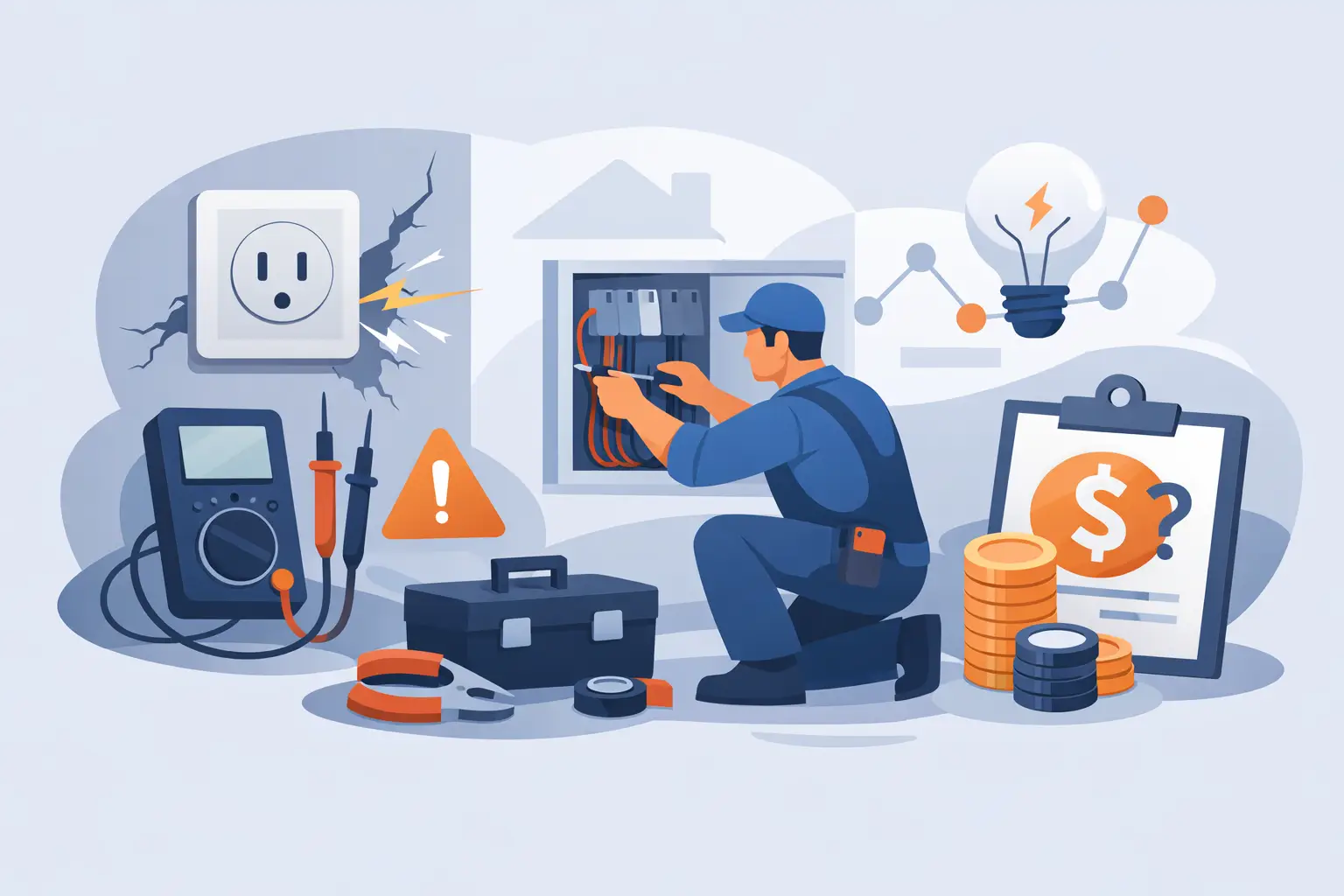
A dead outlet might be a quick repair. A flickering panel, burning smell, or recurring breaker trip is a different story entirely. If you’re asking how much does it cost to fix electrical issues in a house, the honest answer is that pricing can range from a relatively small service call to a larger repair depending on what is failing, how accessible it is, and whether your home needs code-related updates.
For most homeowners, the real question is not just the price. It’s whether the problem is minor, whether it points to something bigger behind the walls, and whether it needs fast attention. In Asheville and surrounding Western North Carolina communities, older homes, additions, basement finishes, and panel limitations often play a big role in what electrical repairs actually cost.
How much does it cost to fix electrical issues in a house?
Electrical repair costs usually fall into a few broad categories. Small fixes like replacing a standard outlet, switch, or breaker can often cost far less than troubleshooting hidden wiring problems or correcting unsafe panel conditions. Once diagnosis, labor time, parts, permit needs, and code compliance enter the picture, the total can move quickly.
A homeowner might pay around $150 to $300 for a straightforward service call with a simple repair. Moderate repairs, such as replacing multiple outlets, fixing a faulty circuit, or repairing damaged wiring in an accessible area, often land in the $300 to $800 range. More involved work like panel repairs, service upgrades, whole-home rewiring sections, or correcting major hazards can run from $1,000 to several thousand dollars.
That range is wide for a reason. Electrical pricing is driven less by the symptom you notice and more by what the electrician finds during testing.
What affects the cost of electrical repairs?
The biggest cost factor is the source of the issue. A switch that stopped working may simply need replacement. But if that switch failed because of loose connections, overloaded wiring, or heat damage in the box, the repair becomes more involved.
Accessibility matters too. An electrician can repair an exposed garage circuit much faster than wiring tucked behind finished drywall or above a hard-to-reach ceiling. If walls need to be opened, if attic access is tight, or if the affected area serves multiple rooms, labor time goes up.
Your home’s age also matters. Many homes in the region have a mix of old and newer electrical work. That can create complications when a repair uncovers outdated wiring methods, undersized service, missing grounding, or previous work that does not meet current code expectations. In those cases, what starts as a repair may need a partial upgrade to be done safely.
Emergency timing can affect price as well. After-hours, weekend, or urgent same-day service usually costs more than a scheduled visit. Most homeowners are happy to pay that premium when the problem involves heat, smoke, loss of critical power, or a safety concern.
Typical repair costs by problem type
Outlet and switch repairs are often among the lower-cost jobs. If an outlet is loose, no longer holds a plug, sparks when used, or has stopped working because the device itself failed, replacement may be fairly simple. The cost rises if the box is damaged, the wiring is deteriorated, or GFCI protection needs to be added where required.
Light fixture and ceiling fan issues can also vary. Swapping a faulty fixture is usually more affordable than tracing a wiring fault causing flickering lights in multiple rooms. If the issue involves the switch leg, neutral connection, or a shared circuit problem, diagnosis takes longer than a basic replacement.
Breaker and circuit issues tend to cost more because they require testing, not guessing. A breaker that keeps tripping may be worn out, but it may also be responding correctly to an overloaded or shorted circuit. Replacing the breaker without fixing the cause does not solve much. Homeowners often save money in the long run when the electrician fully diagnoses the circuit instead of just changing parts.
Wiring repairs can range from manageable to expensive. A short section of damaged wire in an open basement is a very different job than tracing intermittent power loss through finished walls. If rodents, moisture, or heat damage are involved, repairs may need to extend beyond the first visible problem.
Panel work usually lands on the higher end. Loose connections, corrosion, double-tapped breakers, recalled equipment, and signs of overheating are not issues to postpone. Even when the repair itself is limited, the stakes are higher because the panel is the heart of the home’s electrical system.
Common price ranges homeowners should expect
Here is a practical way to think about cost.
Minor repairs often include one clear issue, one accessible location, and limited parts. That might be a bad outlet, a failed switch, or a single breaker replacement after proper testing. These jobs are commonly on the lower end of residential electrical pricing.
Mid-range repairs usually involve troubleshooting plus repair. That includes partial power loss, recurring trips, multiple dead outlets on one circuit, faulty bathroom GFCI protection, or repairing a damaged section of wiring. The price reflects both diagnostic time and corrective work.
Higher-cost repairs usually involve the panel, service equipment, extensive wiring replacement, or code corrections tied to safety. If an electrician finds aluminum branch wiring concerns, lack of grounding, overloaded circuits, or evidence of previous unsafe workmanship, costs can increase because the scope expands.
If your home needs a service upgrade rather than a simple repair, that is a different budget conversation. A house with an older panel may not safely support modern loads like EV chargers, larger HVAC equipment, or added kitchen circuits. In that case, the repair you called about may reveal a capacity problem that needs to be addressed at the source.
When a cheap repair turns into a bigger project
This is where homeowners get frustrated, and it’s also where a trustworthy electrician matters most. Sometimes the original symptom is small, but the underlying condition is not. A warm outlet may point to a loose termination. A dimming light may point to a failing neutral connection. A breaker trip may point to a damaged appliance, or to unsafe wiring in the wall.
That does not mean every visit turns into an upsell. It means electrical systems are connected, and the visible problem is not always the full problem. Good electricians explain what they found, what must be fixed now, and what can reasonably wait.
In older homes especially, repair work can uncover issues that should not be ignored. Two-prong outlets, ungrounded circuits, aging panels, and DIY modifications are common examples. If the repair area is already being opened and tested, it often makes sense to correct known hazards at the same time rather than pay for repeated service calls later.
How to keep repair costs under control
The best way to control cost is to call early. Electrical problems are usually cheaper to fix before they cause damage to devices, wiring, or the panel. A buzzing outlet or frequent breaker trip is easier to deal with than melted insulation or a partially burned connection.
It also helps to describe the problem clearly when scheduling service. Mention whether lights flicker, whether only part of the house is affected, whether the issue started after plugging something in, and whether you have noticed heat, smell, or visible sparking. That helps the electrician arrive prepared and can shorten diagnosis time.
If your home has several concerns, ask for them to be looked at during the same visit. Combining repairs can be more cost-effective than booking separate appointments for a dead outlet now, a bathroom fan issue next month, and a tripping garage circuit after that.
Most of all, avoid the temptation to treat electrical problems as a DIY cost-saving project. The money saved upfront can disappear quickly if the repair is incomplete, unsafe, or creates a bigger issue later.
When to call right away
Some problems should not wait for a convenient opening on the calendar. Call promptly if you smell burning, see scorch marks, hear buzzing from the panel, lose power to part of the home unexpectedly, or have breakers that trip repeatedly without a clear reason. The same goes for outlets that feel warm, lights that dim when major appliances start, or any sign of water exposure near electrical equipment.
For homeowners in Asheville, Arden, Candler, Weaverville, and nearby areas, local conditions matter too. Storms, older housing stock, and renovation-heavy neighborhoods can all contribute to hidden electrical issues that deserve a professional inspection. Asheville Electrical Contractors helps connect homeowners with licensed and insured electricians who can identify the problem, explain the repair, and handle the work safely.
The bottom line is simple. If you are wondering how much does it cost to fix electrical issues in a house, expect the final number to depend on what is actually causing the problem, not just the symptom you can see. A quick diagnosis today often costs less than waiting for a small warning sign to become a larger repair tomorrow.
Need a licensed electrician?
Talk to our team today or request a free written quote.