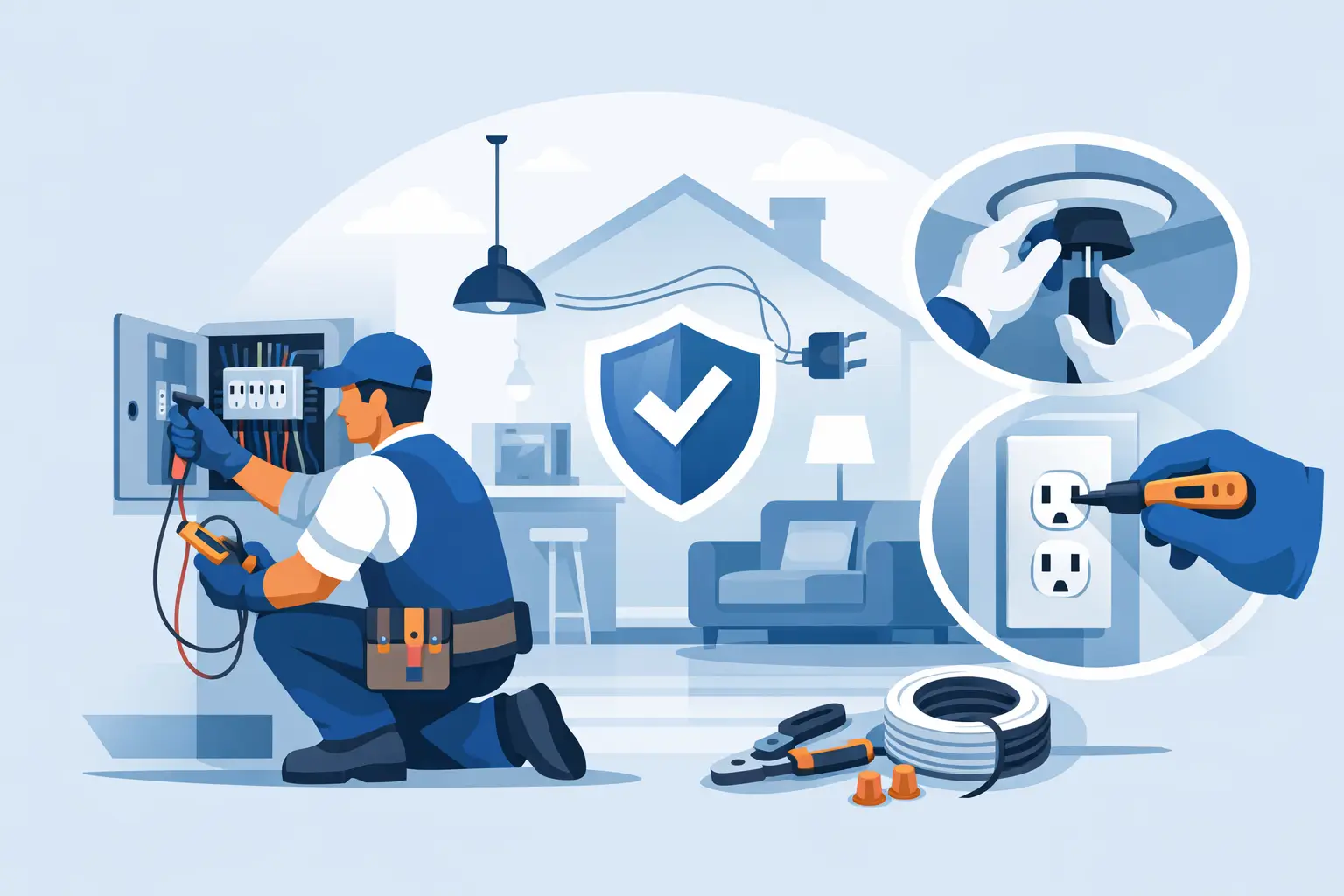
A new light fixture should not turn into a breaker problem. An added appliance should not leave you guessing whether your panel can handle it. That is why home electrical installation matters so much for homeowners in Asheville and nearby communities. The quality of the work affects daily convenience, long-term safety, code compliance, and how confidently you can use your home.
For most households, electrical work starts with a practical need. Maybe you want recessed lighting in the kitchen, a ceiling fan in a bedroom, a dedicated circuit for a microwave, or an EV charger in the garage. Sometimes the need is more urgent – a damaged outlet, a panel that feels overloaded, or older wiring that no longer matches how your household uses power. In every case, the goal is the same: get the job done safely and get it done right the first time.
What home electrical installation really includes
Many homeowners hear the word installation and think only about putting in a new fixture. In reality, residential electrical installation can cover a wide range of work. It may involve replacing outdated devices, adding entirely new circuits, upgrading electrical panels, installing whole-home surge protection, or setting up standby generator connections. It can be a small, single-room improvement or part of a larger remodeling project.
The difference between a simple installation and a more involved one usually comes down to capacity, code, and access. Swapping a light fixture in a newer home is one thing. Adding multiple high-demand devices to an older house with limited panel space is another. The visible part of the project might look straightforward, but the hidden part – load calculations, wiring condition, grounding, breaker compatibility, and permit requirements – often determines whether the job is truly safe.
That is where homeowners benefit from working with licensed and insured electricians. You are not just paying for labor. You are paying for informed decisions that protect the house and the people in it.
Why proper home electrical installation matters
Electrical problems rarely stay small. An outlet that is warm to the touch, lights that flicker when appliances turn on, or breakers that trip too often can point to deeper issues. Sometimes the problem is a bad device. Sometimes it is a sign that the circuit was never designed for current demand.
A proper installation helps prevent overheating, nuisance tripping, equipment damage, and avoidable fire risk. It also helps keep your home aligned with current code expectations. That matters if you are planning renovations, selling the property, or simply trying to avoid future repair bills.
There is also a quality-of-life side to it. Well-planned electrical work makes a home easier to use. You get outlets where you need them, lighting that fits the room, and circuits that support modern appliances without constant workarounds. Good electrical planning is not just about safety. It is about making the home function better every day.
Common projects homeowners request
Some installation requests are tied to convenience, while others are prompted by clear warning signs. Both are valid reasons to call for service.
Lighting upgrades remain one of the most common requests. Homeowners often want recessed lights, pendant fixtures, under-cabinet lighting, exterior security lights, or ceiling fans installed where no fixture existed before. These projects can improve comfort and appearance, but they still need correct wiring, proper support, and safe switching.
Dedicated circuits are another frequent need. If you are adding a microwave, garbage disposal, hot tub, workshop equipment, or garage refrigerator, your existing circuits may not be the right fit. Plugging a major load into a general-use circuit can cause repeated trips or strain the system over time.
Panel upgrades have become more common as homes add more technology. Older panels may not have enough capacity for EV chargers, electric ranges, HVAC updates, or backup power systems. A service upgrade can open the door for future improvements, but not every home needs one. Sometimes a subpanel or a few circuit adjustments will do the job. It depends on the age of the system, current load, and your plans for the property.
Surge protection and generator connections also come up often in Western North Carolina, where storms and outages can be a real concern. These are not cosmetic upgrades. They are practical installations that protect electronics and improve resilience when the power is not stable.
Signs your home may need more than a basic installation
A homeowner might call for a simple outlet replacement and learn that the issue goes deeper. That is not upselling when it is legitimate. It is part of responsible electrical work.
If your breakers trip often, your panel feels outdated, or your lights dim when larger appliances start, your system may be operating too close to its limit. If you have two-prong outlets, missing GFCI protection in kitchens or bathrooms, or signs of older wiring methods, the installation may need to include safety updates. If an electrician finds damaged conductors, loose connections, or improper grounding, fixing the visible issue alone would not be enough.
This is one of the biggest trade-offs in residential work. A quick repair or installation may cost less today, but if the surrounding system is not safe or not adequate, the cheaper option can create more expense later. The right approach depends on the condition of the home, the urgency of the problem, and how long you plan to stay in the property.
What to expect during a professional installation
A good electrical visit should feel organized, not confusing. First, the electrician assesses the request and checks the existing system. That may include looking at the panel, verifying circuit capacity, inspecting wiring conditions, and confirming whether permits or code-related updates are needed.
From there, the scope becomes clearer. In some cases, the work is straightforward and can be completed quickly. In others, the electrician may recommend additional steps so the installation performs safely and passes inspection where required. That might include replacing damaged wiring, adding a dedicated circuit, updating breakers, or improving grounding and protection.
Homeowners should expect clear communication about what is necessary, what is optional, and what may become important soon even if it is not urgent today. That kind of honesty matters. It helps you make decisions based on safety and budget instead of guesswork.
Why DIY is risky for residential electrical work
There is a reason homeowners often feel uneasy about electrical projects. Even when the task looks simple, the margin for error is small. A loose connection hidden behind a wall can create heat. An incorrectly sized breaker can fail to protect the circuit. Improper grounding can leave equipment and people vulnerable.
DIY work also creates issues when homes are sold or inspected. Unpermitted or non-compliant installations can slow a transaction, trigger additional repairs, or raise insurance concerns. For homeowners trying to protect their investment, professional installation is usually the less risky path.
That is especially true for panel work, new circuits, EV charger installation, generator hookups, and any project involving older wiring. These are not areas where trial and error makes sense.
Choosing the right electrician for the job
Not every electrical company is the right fit for residential service. Homeowners need someone who understands house wiring, local code expectations, and the practical reality of working in occupied homes. Responsiveness matters too. If the issue affects safety or everyday use, waiting days just to get a callback is frustrating.
Look for licensed and insured professionals who can explain the work in plain language and identify whether the problem is isolated or part of a larger system issue. A reliable provider should help you move from uncertainty to a clear next step. That is exactly why many local homeowners use Asheville Electrical Contractors to connect with qualified residential electricians without spending hours trying to vet providers on their own.
When it makes sense to schedule service
You do not need to wait for sparks or smoke to take electrical issues seriously. If you are planning a remodel, adding high-demand equipment, noticing recurring power problems, or living with an older panel that no longer matches your needs, it is time to get an expert opinion.
The best time to address electrical work is often before the problem becomes disruptive. A planned installation is usually simpler than an emergency repair, and it gives you more room to consider the right long-term solution for your home.
A safe, well-planned electrical system does more than power the house. It gives you one less thing to worry about when you flip a switch, plug something in, or plan your next upgrade.
Need a licensed electrician?
Talk to our team today or request a free written quote.