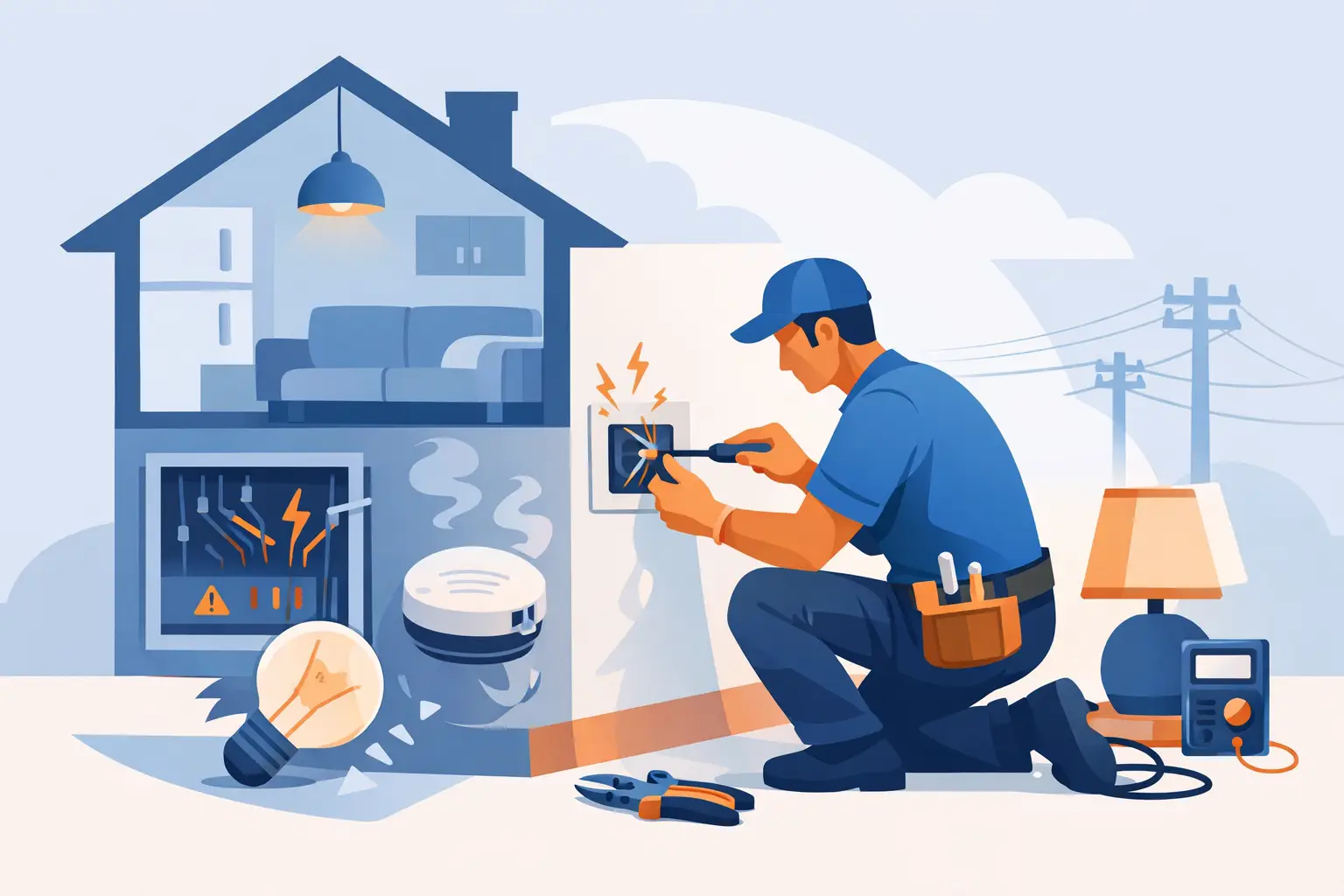
A breaker keeps tripping every time the microwave and toaster run together. A bedroom outlet suddenly stops working. Lights flicker when the HVAC kicks on. These are the kinds of house electrical repairs homeowners in Asheville and nearby communities run into all the time, and they are not problems to ignore until they get worse.
Some electrical issues are minor fixes. Others point to overloaded circuits, loose connections, aging components, or code and safety concerns hidden behind walls. The hard part for most homeowners is knowing the difference. If something feels off, the safest move is to have it checked by a licensed electrician before a nuisance problem turns into a costly or dangerous one.
Which house electrical repairs need fast attention?
Not every electrical problem is an emergency, but some deserve immediate service. If you smell burning near an outlet or panel, hear buzzing from switches or receptacles, see scorch marks, or lose power to part of the home without an obvious utility outage, treat that as urgent. The same goes for a panel that feels hot, repeated breaker trips, or any shock when plugging in appliances.
Water also changes the equation. If an outlet, switch, crawl space, basement area, or electrical panel has been exposed to moisture, do not assume it is fine once it dries out. Western North Carolina homes can deal with storms, humidity, and water intrusion, and electrical components do not always fail right away. Sometimes the risk shows up later as corrosion, arcing, or unpredictable outages.
Other problems may not need same-day service, but they still should not sit on a to-do list for months. A dead outlet, a dimming fixture, a switch that only works sometimes, or a garage circuit that is no longer handling your tools are all signs that a repair or upgrade may be needed.
Common problems behind residential electrical repairs
A lot of house electrical repairs come down to a short list of causes. Loose wiring connections are common, especially in older homes or in areas where devices have seen years of use. Worn receptacles and switches can also fail over time. If plugs fall out easily or a switch feels loose or crackles, the device itself may be at the end of its service life.
Overloaded circuits are another frequent issue. Homes built years ago were not designed for today’s mix of kitchen appliances, home office setups, entertainment systems, EV chargers, and added outdoor equipment. If one circuit is trying to carry too much, the warning signs usually show up as tripped breakers, warm outlets, or uneven performance from lights and appliances.
Then there is panel-related trouble. A breaker panel is the control center for the home, and when it is outdated, damaged, or undersized, problems tend to spread. A single failed breaker can cause one issue. A crowded or aging panel can create many. In some homes, the repair is straightforward. In others, the real fix is a service upgrade or panel replacement because patching individual symptoms will only go so far.
When an outlet problem is more than just one outlet
A dead outlet does not always mean the outlet itself has failed. It could be tied to a tripped GFCI device elsewhere in the home, a loose connection upstream, or a breaker issue at the panel. In kitchens, bathrooms, garages, laundry rooms, and outdoor areas, protection requirements matter, so the repair is not just about restoring power. It is also about making sure the device is protecting the circuit the way it should.
That is one reason DIY assumptions can get homeowners into trouble. Replacing a faceplate is one thing. Guessing at wiring conditions behind the wall is another. If the outlet is discolored, warm, sparking, or repeatedly loses power, the problem may be deeper than the device you can see.
Flickering lights, tripped breakers, and what they usually mean
Flickering lights get brushed off too often, especially if the problem comes and goes. Sometimes the cause is simple, like a failing bulb or loose fixture connection. But if multiple lights flicker, or if the flicker happens when large appliances start, that points to a circuit load issue, voltage fluctuation, or a connection problem that needs proper diagnosis.
Tripped breakers tell a similar story. A breaker that trips once after a clear overload may have done its job. A breaker that trips repeatedly is signaling a persistent fault. That could be an overloaded branch circuit, a short, a ground fault, or a breaker that is no longer operating properly. Resetting it over and over is not a repair. It is postponing one.
This is where a professional diagnosis matters. The right solution depends on what is actually causing the interruption. Sometimes a homeowner needs a repair to one circuit. Sometimes they need additional dedicated circuits for kitchens, workshops, sump pumps, or new equipment. It depends on how the home is wired and how the space is being used now.
Older homes often need more than a basic repair
Many homes in and around Asheville have age, character, and electrical systems that have been added onto over the years. That mix can create hidden issues. An older house may have ungrounded receptacles, outdated panels, worn wiring insulation, or past work that does not meet current code expectations.
In those cases, the repair conversation has to be honest. Yes, an electrician may be able to fix the immediate problem. But if the larger system is outdated, it is worth knowing whether the repair is a short-term solution or part of a bigger upgrade that should be planned soon. Homeowners usually appreciate direct answers here. Spending less today only makes sense if it does not increase risk or lead to repeat service calls.
Safety devices matter in house electrical repairs
A lot of residential repair work involves more than restoring power. It also includes bringing protection up to a safer standard. GFCI and AFCI protection, grounded outlets, whole-home surge protection, and properly functioning breakers all play a role in reducing risk.
This is especially relevant when homeowners are renovating, adding appliances, finishing basements, or updating older rooms. A new receptacle or lighting circuit may seem simple, but code requirements and load calculations matter. The benefit of using a licensed, insured electrician is not just getting the lights back on. It is knowing the repair or replacement is being handled correctly for the home you live in today.
What to expect when you call for service
Most homeowners do not want a lecture on electrical theory. They want to know what is wrong, whether it is dangerous, and what it will take to fix it. Good residential service should start there.
A qualified electrician will usually begin by identifying the symptom, testing the affected circuit or device, and checking whether the visible problem points to a larger issue. From there, the repair may involve replacing a damaged receptacle, switch, breaker, or fixture, tightening or rebuilding a failing connection, addressing panel issues, or recommending a circuit addition or upgrade where the system is undersized.
If you are dealing with multiple symptoms at once, mention all of them. The kitchen outlet that stopped working may be related to the garage GFCI that trips, or the flickering hallway light may be part of a wider connection issue. Sharing the full picture helps speed up diagnosis and avoids piecemeal repairs.
Why quick action usually saves money
Electrical issues rarely improve on their own. A loose connection becomes heat. An overloaded circuit keeps tripping until appliances are damaged or the wiring degrades further. An aging panel becomes a source of recurring service problems instead of a one-time repair.
That does not mean every problem requires a major project. It means delays tend to narrow your options. Catching an issue early often allows for a cleaner, more targeted fix. Waiting can turn a single repair visit into a larger job involving multiple devices, damaged wiring, or emergency response.
For homeowners who are trying to balance budget and safety, this is where practical advice matters. If something is warm, sparking, buzzing, burning, or repeatedly failing, do not wait. If the issue is smaller but persistent, schedule it before it turns into a more disruptive problem. Fast action is not about overreacting. It is about staying ahead of a hazard.
Choosing the right help for residential electrical work
House electrical repairs are not just about technical skill. They are also about trust. You want to know the person working in your home understands residential systems, recognizes code concerns, and can explain what is necessary versus what is optional.
That is why many local homeowners use Asheville Electrical Contractors to connect with licensed and insured electricians for repairs, diagnostics, and upgrades. The goal is simple: get qualified help without wasting time trying to sort through who to call when the problem is already affecting your home.
If your lights are flickering, outlets are failing, breakers are tripping, or your panel is showing its age, do not guess your way through it. The right repair starts with a clear diagnosis, and peace of mind starts when the problem is handled before it has a chance to spread.
Need a licensed electrician?
Talk to our team today or request a free written quote.