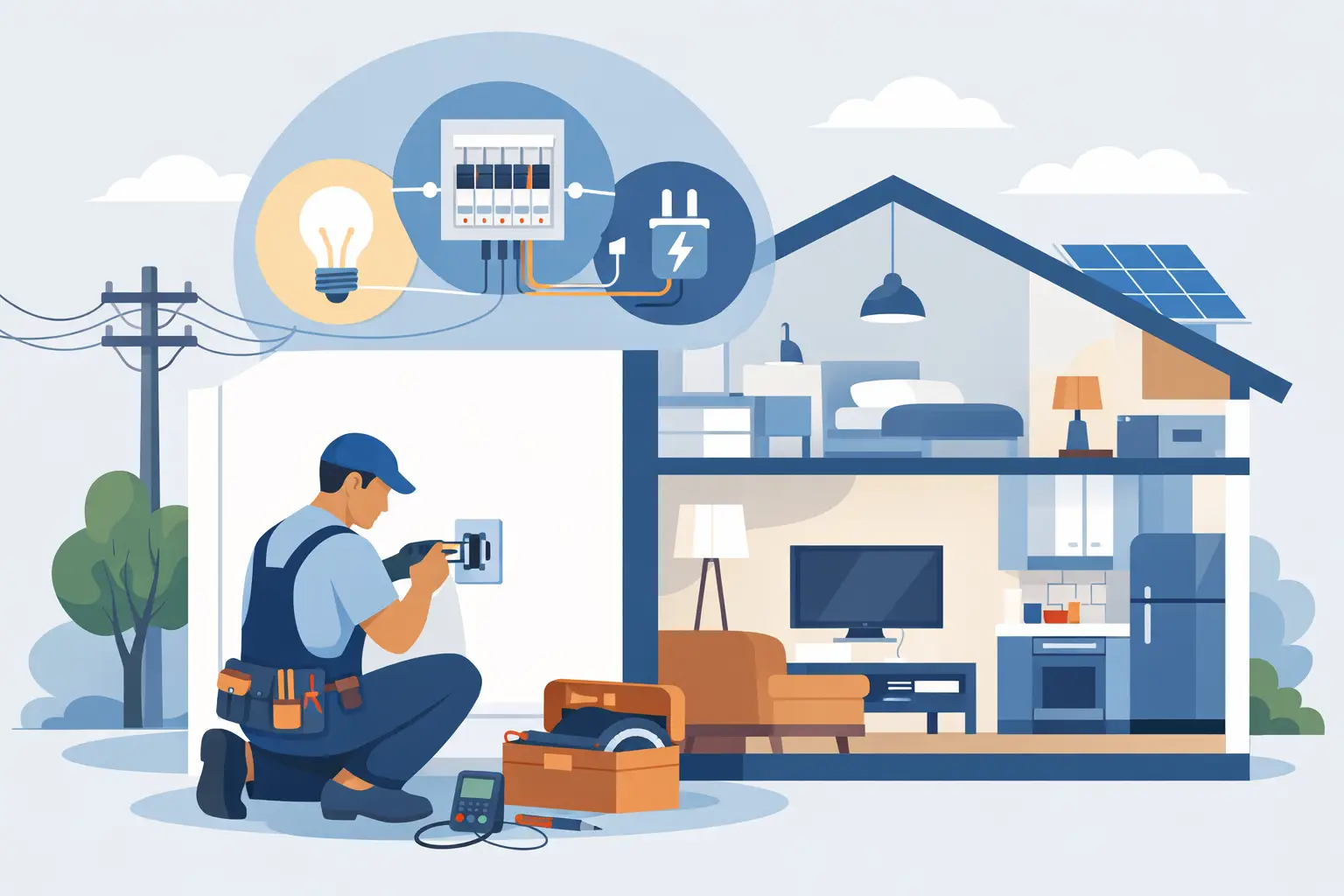
A new light fixture rarely stays just a new light fixture for long. Once homeowners start looking at flickering lights, crowded power strips, older panels, or a garage that needs EV charging, residential electrical installations become less about convenience and more about safety, capacity, and doing the work right the first time.
For homeowners in Asheville and nearby Western North Carolina communities, electrical work often happens in stages. A kitchen remodel needs new circuits. A finished basement needs lighting and smoke detectors. An older home needs grounded outlets, panel updates, or surge protection. Each job may seem separate, but they all connect back to one question: can your home’s electrical system safely support how you live now?
What residential electrical installations actually cover
Residential electrical installations include far more than adding a switch or swapping a ceiling fan. In practical terms, this work can involve new wiring, outlets, dedicated circuits, lighting, breaker panel components, whole-home surge protection, generator connections, GFCI and AFCI protection, smoke and carbon monoxide detector wiring, and service upgrades.
That broad scope is why homeowners should avoid treating installation work as cosmetic. The visible part may be a new fixture or outlet, but behind the wall there may be load calculations, breaker sizing, wire selection, grounding, and code requirements that directly affect safety. What looks simple from the room can be more involved at the panel.
In older Asheville-area homes, that gap between what appears simple and what is actually needed is common. A homeowner may request a new appliance circuit and find that the panel is full, the grounding is outdated, or the existing wiring method no longer fits current standards. That does not always mean the project becomes major, but it does mean good installation work starts with evaluation rather than assumptions.
Why homeowners usually need residential electrical installations
Most residential electrical installations happen for one of three reasons: something is changing in the home, something is not working safely, or the electrical system is no longer keeping up.
Home improvement projects are a major driver. Renovated kitchens, bathroom updates, home offices, outdoor living spaces, and finished garages all create new electrical demands. Modern households rely on more devices, more appliances, and more charging than homes were designed for even 20 years ago.
Safety concerns are another reason people call. Two-prong outlets, buzzing switches, warm receptacles, ungrounded wiring, and repeated breaker trips are warning signs that should not be ignored. Sometimes the solution is a focused installation, such as replacing unsafe devices or adding required protection. Other times, the safest path is a larger upgrade.
Then there is capacity. EV chargers, hot tubs, tankless water heaters, workshop equipment, and standby generators all place real demand on a home’s system. If the service, panel, or circuit layout is undersized, adding one more item can push things beyond what the system can reliably handle.
The most common installation projects in local homes
Lighting remains one of the most requested upgrades because it improves daily use right away. Recessed lighting, under-cabinet lighting, exterior security lighting, and ceiling fan installations are all common. Good lighting work is not just about appearance. Fixture placement, switch control, dimmer compatibility, and circuit loading all matter.
Outlet and switch installations are just as common, especially in older homes where outlet placement no longer makes sense for how rooms are used. Adding receptacles can reduce extension cord use, improve convenience, and bring spaces closer to modern expectations. In kitchens, bathrooms, garages, and outdoor areas, proper GFCI protection is a basic safety issue, not an upgrade extra.
Dedicated circuits are another frequent need. Refrigerators, microwaves, sump pumps, laundry equipment, HVAC components, and EV chargers often require their own circuits. Homeowners sometimes try to solve nuisance tripping by changing devices or using fewer appliances at once, but repeated trips usually point to a circuit design issue that needs professional attention.
Panel-related installation work is also high on the list. A full panel, outdated breakers, or a service that cannot support current household demand can limit every other improvement. When homeowners plan several upgrades at once, it often makes sense to look at the panel early instead of discovering limitations halfway through the project.
When an older home changes the scope of the job
Many homes in and around Asheville have character, but older electrical systems come with trade-offs. Existing wiring may be undersized, ungrounded, deteriorated, or altered over time by previous repairs. Panels may have little remaining capacity. Outlet spacing, lighting layout, and protection requirements may not match current expectations.
This does not mean every older home needs a complete rewire. In many cases, targeted residential electrical installations can solve the immediate issue safely. A licensed electrician may be able to add a dedicated circuit, replace unsafe devices, improve grounding, or install surge protection without overhauling the entire system.
Still, it depends on what the house already has and what you want to add. If multiple rooms show electrical problems, if breakers trip regularly, or if renovation plans involve several new circuits, broader upgrades may be more cost-effective than repeated spot fixes. A good recommendation should match the home, not a one-size-fits-all sales pitch.
Code compliance matters more than many homeowners realize
Electrical code is not just a permit issue. It is how installation work is evaluated for safety, reliability, and proper protection. That includes where outlets are required, which circuits need GFCI or AFCI protection, how equipment is grounded, and whether the service and panel are sized correctly.
For homeowners, code compliance matters in a few practical ways. First, it reduces the risk of shock, fire, and equipment damage. Second, it helps avoid problems during remodeling, inspections, and future home sales. Third, it keeps installation work from becoming a patchwork of shortcuts that create bigger costs later.
This is one reason licensed and insured electricians matter. Residential work is full of details that seem minor until they are missed. A mismatched breaker, an overloaded circuit, poor termination, or an improperly installed outdoor component can create expensive and dangerous problems.
Planning an installation the smart way
The best time to think about electrical work is before the walls are closed and before new equipment arrives. If you are planning a remodel, appliance upgrade, generator setup, or EV charger, electrical planning should happen early enough to account for panel space, service capacity, and permit needs.
It also helps to think one step ahead. If you are finishing a garage now but expect to add an EV charger later, that should be part of the conversation. If you are replacing a panel, it may make sense to plan for future circuits instead of only today’s minimum. Small decisions during one project can make future additions easier and less expensive.
Homeowners should also be clear about symptoms, not just requests. Saying “I need a new outlet” is helpful, but saying “the breaker trips when the microwave and toaster run together” gives far better direction. The more context you provide, the easier it is to identify whether the project is a straightforward installation or part of a larger issue.
Choosing the right help for residential electrical installations
Electrical work is not the place to gamble on the lowest quote with the fewest questions. A reliable contractor or referral platform should make it easier to connect with licensed, insured electricians who understand residential systems, local service needs, and the urgency behind many household electrical problems.
That local factor matters. Homes in this region vary widely in age, layout, and electrical history. Weather-related concerns, generator planning, surge protection, and service reliability can all shape the right recommendation. Homeowners are usually not looking for a technical lecture. They want clear answers, safe work, and a direct path to getting the job scheduled.
Asheville Electrical Contractors is built around that kind of practical help, connecting homeowners with qualified electricians for both common installations and larger electrical upgrades. Whether the need is urgent or part of a planned project, the goal is the same: get the work evaluated properly and move forward with confidence.
What to expect once the work is underway
Most installation projects start with an assessment of the existing system, the load involved, and whether the panel and wiring can support the new work. Depending on the project, there may be permitting, inspection requirements, material lead times, or limited drywall access. A trustworthy electrician should explain that clearly instead of glossing over it.
Some jobs are simple and fast. Others uncover conditions that change the plan. If an electrician finds outdated wiring, improper prior work, or insufficient panel capacity, the project may need to expand. That can be frustrating, but it is better to catch those issues before a new installation is energized.
The right outcome is not just that the new outlet works or the new light turns on. The right outcome is that the installation fits the home safely, meets code, and supports your household without creating hidden problems behind the walls.
If your home is showing signs that the electrical system is stretched, outdated, or ready for an upgrade, waiting usually does not make the work easier. A quick conversation now can prevent a bigger repair later and help you make smart decisions about what your home needs next.
Need a licensed electrician?
Talk to our team today or request a free written quote.